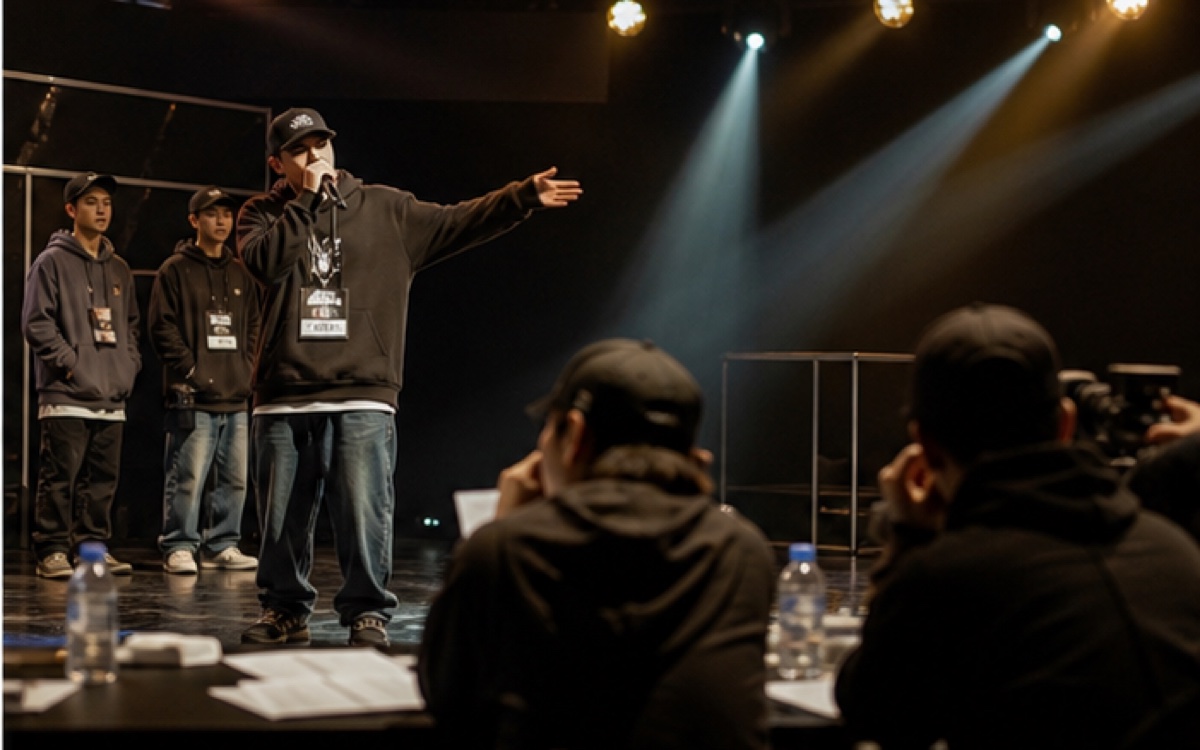
But the start was not smooth. The viewership rating for the first episode was only 0.6% nationwide, the lowest in the show's history. This is analyzed as a result of a shift in viewing to OTT platforms and audience fatigue with the hip-hop genre. Despite the largest number of applicants ever (over 36,000), the general public's reaction was colder than before. This season faces the challenge of how to bring about changes in hip-hop culture amidst the challenge of 'low viewer ratings'.
The notable changes in this season are the expansion of the platform and the dualization of content. While the main broadcast focuses on popular stories and sound source competitiveness, ‘Yacha’s World’, produced as a TVing original, established a strategy to deliver the raw energy of hip-hop outside of deliberation and regulations. By unhesitatingly revealing hip-hop's unique strong rap and harsh emotions, which were suppressed due to broadcasting regulations, we aim to quench the thirst of passionate fans, while also serving as a 'loudspeaker' that illuminates the artist's personality in a more three-dimensional way during the main broadcast.
CP Choi Hyo-jin, head of production, said, "We have been working on the Show Me the Money series for a long time and have been thinking about ways to provide new stories to viewers. As a result, we have created 'Yacha', a TV exclusive. He said, “The ‘World of Yacha’ rap battle will be added to the story structure of ‘Show Me the Money 12’, and you will be able to experience a different kind of fun by crossing the two worlds.”
One of the major problems facing the Korean hip-hop scene is ‘Show Me dependence.’ A distorted structure has been formed in which the success of a specific program determines the sales of the entire genre and the size of the performance market. While 'Show Me the Money' has not been aired for the past three years, the hip-hop performance market has shrunk, and it has become increasingly difficult to find hip-hop songs on the music charts.
The reason why this season's success is important is not just related to the program's profitability. This serves as an indicator to determine whether the domestic hip hop industry can become self-reliant. If the program stops at creating a one-time fad, 'Show Me dependence' will become even more severe. However, if the featured artists build a sustainable fan base even after the broadcast and lead to expansion into various sub-genres, this could be a signal of positive change.
The current hip-hop scene desperately needs the emergence of so-called 'big fish' level newcomers. The re-runs of past winners such as Kim Ha-on are attracting attention, but paradoxically, this also indicates the absence of new stars. In order for 'Show Me the Money 12' to not simply repeat the glory of the past, it is essential to break the existing mold and discover new artists.
In particular, the attempt to expand the global preliminaries and accept rap in 24 languages is evaluated as an effort to broaden the spectrum of Korean hip-hop. Beyond bringing hip-hop back to the mainstream, the real task given this season is to create a structure that can coexist with various subcultures.
'Show Me the Money 12', which started with a low viewership rating of 0.6%, has just begun. What is more important than the numbers shown as an indicator of box office success is the way this program handles the genre of hip-hop. It remains to be seen whether the main broadcast and ‘The World of Yasha’ will exert a synergistic effect and provide a foundation for artists to become independent, or whether it will only be a temporary popularity dependent on the broadcasting station’s editing ability.